Serving Pomona, CA and surrounding areas. (626) 659-1648
Pomona sun and Santa Ana winds age a wood fence fast. We clean, prep, and seal your fence so it holds its color, stays flexible, and does not turn gray and brittle after another hot season.
Fence staining and sealing in Pomona, CA slows the two things that destroy wood fences fastest - UV rays bleaching the fibers and moisture getting into the grain - and most residential jobs are wrapped up within two to three days from cleaning through final coat.
Pomona homeowners deal with a specific combination of stressors: afternoon sun that hits west- and south-facing fences hard from May through October, followed by dry Santa Ana winds every fall that pull moisture right out of wood. An untreated fence in this climate can go from looking fine to looking weathered and gray in a single season. Staining and sealing is the routine maintenance step that keeps that from happening - and it costs a fraction of what board replacement or a full fence replacement runs. If you already have an older fence showing some wear, it is worth combining a treatment with a quick look at whether any boards need attention before the stain goes on. Our fence replacement team can swap individual boards as part of the same project so you are not staining over wood that is already failing.
We serve homeowners across Pomona and the surrounding cities. If you are not sure whether your fence needs a light refresh or a more thorough treatment, a free estimate visit will answer that question - and you will have a written quote before any work starts.
If your fence boards have turned from warm brown to washed-out silver-gray, the wood has lost its protective finish and UV rays are breaking down the fibers. In Pomona, this can happen within two to three years on south- and west-facing fences. Gray wood is not just an appearance problem - it means the wood is drying out and becoming more likely to crack and splinter.
Splash a little water on the fence boards. If it soaks in and darkens the wood within a few seconds, the sealer has worn off and the fence is absorbing moisture it should not be. This is the clearest single signal that treatment is overdue - and the earlier you catch it, the less prep work the job will need.
After a strong Santa Ana wind period - which Pomona sees every fall - check your fence for boards that have started to crack along the grain or feel rough and splintery. Those winds pull moisture out of wood fast. Small cracks caught early can be treated and stabilized; left alone, they grow and eventually require board replacement.
If you can see patches where the old finish is lifting away from the wood in flakes or bubbles, the existing coating has failed. This often happens when a previous job was done over dirty or wet wood. Peeling finish has to be removed before new stain can bond - so the sooner you address it, the less prep work and cost is involved.
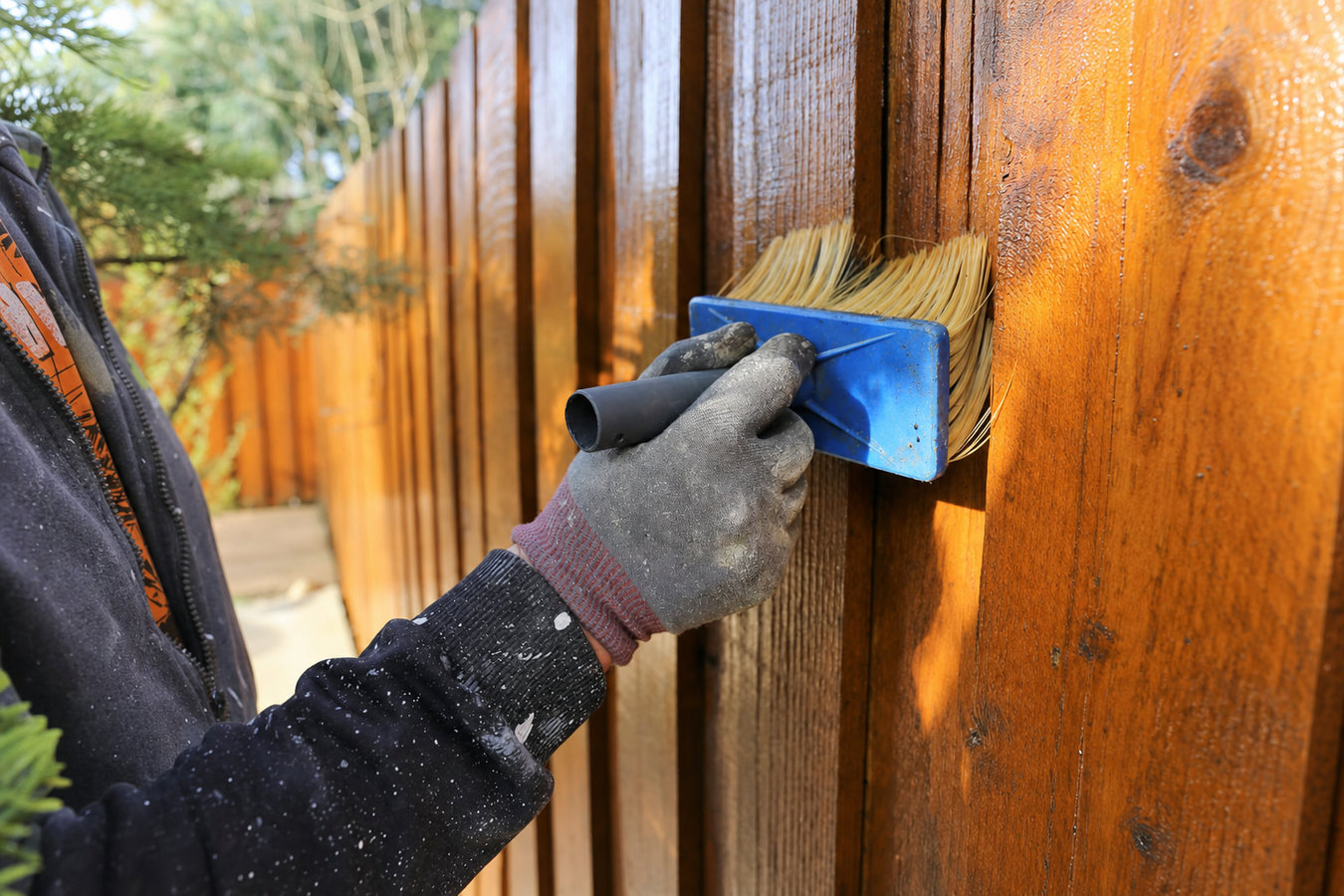
Every job starts with prep - because that is what separates a finish that holds for three years from one that starts peeling in six months. We clean the fence using a pressure washer or a wood-safe cleaning solution to remove dirt, mildew, and any old flaking finish. Then we let the wood dry completely - typically 24 to 48 hours - before we touch it with stain. Skipping that drying step is the single most common reason stain jobs fail early, and we do not rush it. On application day, we use a combination of sprayer, roller, and brush depending on the fence style - sprayers for flat board sections, brushes to work product into tight spots and end grain where moisture enters fastest. We offer penetrating oil-based stains for deep protection and semi-transparent formulas for homeowners who want to show the wood grain while adding color. For those in HOA neighborhoods, we help you confirm the approved color range before any product is ordered. Wood fence installation customers often schedule staining as a follow-on project once the new wood has had a few weeks to dry out and is ready to accept a finish.
We finish every job with a walkthrough - pointing out any spots that got extra attention, telling you when the fence will be fully cured and safe for kids and pets, and letting you know roughly when to expect the next treatment given Pomona's sun and wind conditions. You get a copy of the product information so future touch-ups and re-applications are straightforward, whether you call us or handle it yourself.
Best for fences with mildew, peeling old finish, or significant dirt buildup - gets the wood surface ready to accept new stain evenly.
Soaks deep into wood fibers rather than sitting on the surface - fades gradually rather than peeling, and is the choice most wood finishing professionals recommend for outdoor fences.
Adds color and UV protection while still showing the natural wood grain - a good middle ground for homeowners who want a fresh look without hiding the material.
Applied over the stain to add a final barrier against moisture absorption - especially valuable on Pomona fences that face west or south and see the most afternoon sun.
Pomona sits in the eastern San Gabriel Valley and regularly sees summer temperatures above 95 degrees, with intense afternoon sun that hits west- and south-facing fences the hardest. That UV exposure bleaches and dries out wood faster than in coastal cities, which means fences here tend to need re-staining every two to three years rather than the four-year cycle you might see in a milder climate. Pomona also has a significant share of housing built between the 1950s and 1980s, and older wood that has been through many wetting and drying cycles is more porous - it absorbs stain faster and may need a second coat to get even coverage. We factor that into the estimate rather than treating every fence the same way regardless of age and condition. Homeowners in La Verne, CA face the same sun and wind conditions, and we carry the same prep standards across every job in the area.
Every fall, Santa Ana winds roll through the Pomona Valley - hot, dry gusts that can strip moisture from wood surfaces in a matter of hours. Scheduling fence staining and sealing in late summer or early fall, before the Santa Ana season peaks, gives your fence the best protection going into the driest stretch of the year. California also periodically imposes outdoor water use restrictions during drought periods, and we have low-water cleaning alternatives ready so the prep step never gets skipped - even when pressure washing is limited. Homeowners in Ontario, CA deal with the same seasonal wind conditions, and we apply the same timing recommendations there.
Call or submit a request online and we will typically get back to you within one business day. We ask a few quick questions - fence length, wood type, and when it was last treated - then schedule a free on-site visit so we can see the actual condition of the wood and quote accordingly.
Before the crew arrives, move patio furniture, planters, grills, and anything stored along the fence line. Plan to keep pets inside or in a separate part of the yard. A clear path along both sides makes the job go faster and protects your belongings from overspray.
The crew cleans the fence to remove dirt, mildew, and old flaking finish. After cleaning, the wood dries completely - usually 24 to 48 hours - before any stain is applied. We schedule the application day around this window, not around the fastest possible turnaround.
On application day we work through the fence using the right combination of sprayer, roller, and brush for your fence style. When the job is done, we walk the fence with you, explain curing time for pets and kids, and leave you with the product information for future reference.
Free estimate, written quote, no obligation. We reply within one business day.
(626) 659-1648A stain job is only as good as the surface underneath it. We clean every fence before we touch it with product - and we wait for the wood to dry fully before applying stain. That is the difference between a finish that holds for three years and one that starts peeling in six months. We build that drying window into the project timeline from the start.
Many Pomona neighborhoods with homeowners associations require color approval before fence work begins. We ask about HOA requirements upfront, help you identify the approved color range, and can provide product samples to submit if your association requests them. You do not have to navigate that process on your own.
California drought restrictions can limit outdoor pressure washing, and a contractor who just skips the prep step when restrictions hit is setting your fence up for an early failure. We keep low-water cleaning alternatives available year-round so the prep is never compromised - regardless of what water restrictions are in effect when your job is scheduled.
The{' '} American Fence Association sets industry standards for installation and finishing practices. Contractors who follow AFA best practices approach prep, product selection, and application technique consistently - not based on how fast they want to finish the job. You can verify AFA membership and standards at{' '} americanfenceassociation.com.
These are not talking points - they are the specific things that determine whether a stain job looks great in three years or falls apart in one. We have been doing this work in Pomona long enough to know which shortcuts cost homeowners money later, and we do not take them.
When staining and sealing is no longer enough, we remove the old fence completely and build a new one from the posts up.
Learn MoreNew wood fencing installed with proper post depth for Pomona's soil - staining can be scheduled once the wood has dried after installation.
Learn MorePomona summers are hard on wood - protect your fence now and avoid a costlier replacement later. Call or request a free estimate today.